What is a Kidney Function Test (KFT)?
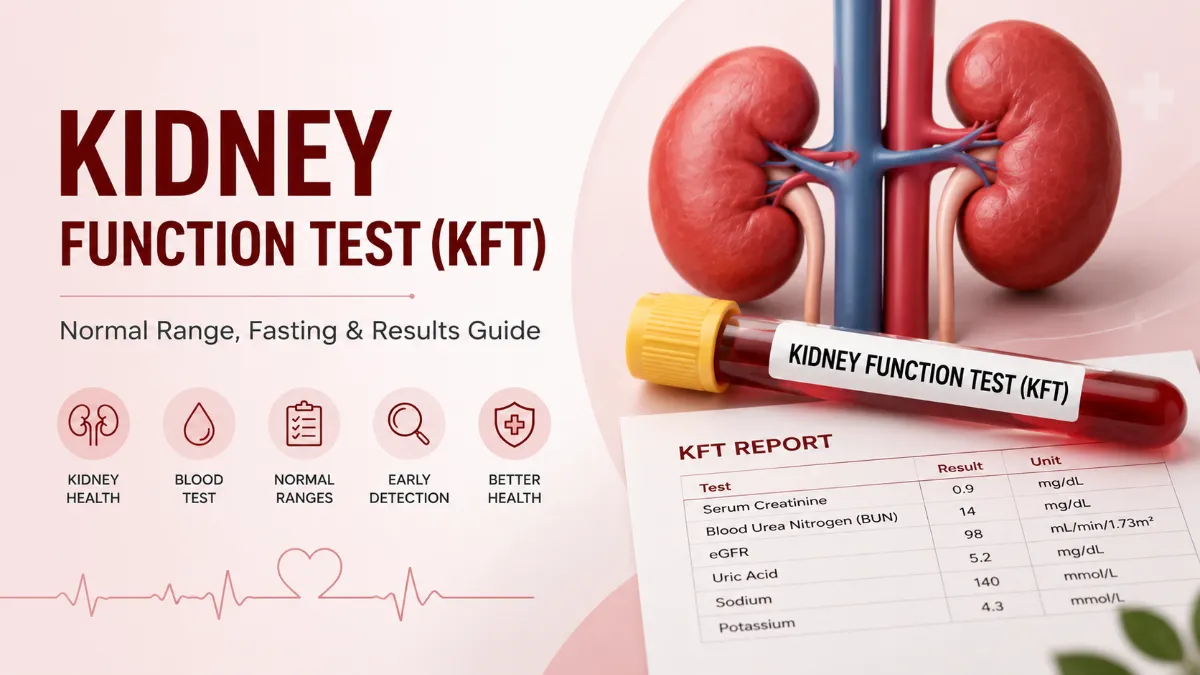
A Kidney Function Test, often called a KFT or renal function test, is a group of blood measurements that look at how well your kidneys are filtering waste and balancing fluids in your body. It typically includes serum creatinine, blood urea nitrogen (BUN), estimated glomerular filtration rate (eGFR), uric acid, and key electrolytes like sodium and potassium.
Your kidneys filter roughly 150 to 180 litres of blood a day, removing waste products and excess fluid while keeping minerals in balance. A KFT panel gives a snapshot of how efficiently that filtering process is working, which is why it is one of the more commonly ordered blood panels in routine health checkups across India.
Why is this test done?
• To screen for early signs of kidney dysfunction, especially in people with diabetes or high blood pressure
• To monitor existing kidney disease and track whether it is stable, improving, or worsening
• To evaluate symptoms such as swelling, fatigue, or changes in urination
• To check kidney function before starting medications that are processed by the kidneys, or before certain imaging scans that use contrast dye
• As part of a routine annual health checkup, particularly for adults over 40
Who should get this test?
Talk to your doctor about a KFT if you have diabetes or high blood pressure, since these are the two leading contributors to kidney strain over time. It is also worth discussing if you notice persistent swelling in your ankles or around your eyes, unusual fatigue, changes in how often or how much you urinate, or foamy urine.
People with a family history of kidney disease, those on long-term pain medication, and anyone being evaluated for unexplained high blood pressure may also be advised to get this panel done. A KFT on its own does not confirm a diagnosis. It is one piece of information your doctor will interpret alongside your history and any other tests.
How is the test done?
A KFT is done through a simple blood draw from a vein in your arm, usually taking just a few minutes. Most labs ask for 8 to 12 hours of fasting before the test, though your doctor may waive this depending on which parameters are being checked, so confirm the fasting requirement when you book the test. Some doctors also request a urine sample alongside the blood draw for a more complete picture of kidney function. Reports are typically available within a day.
Normal Range
Parameter | Normal Range | Unit |
|---|---|---|
Serum Creatinine (Men) | 0.7 – 1.3 | mg/dL |
Serum Creatinine (Women) | 0.6 – 1.1 | mg/dL |
Blood Urea Nitrogen (BUN) | 7 – 20 | mg/dL |
eGFR | 90 or above | mL/min/1.73m² |
Uric Acid (Men) | 3.4 – 7.0 | mg/dL |
Uric Acid (Women) | 2.4 – 6.0 | mg/dL |
Sodium | 135 – 145 | mmol/L |
Potassium | 3.5 – 5.0 | mmol/L |
Reference ranges can vary slightly between labs depending on their equipment and method, always check the range printed on your own report.
Creatinine and eGFR figures in particular differ a little from one source to the next because labs use different measurement methods. IFCC's work on standardising creatinine testing has helped narrow this gap globally, but small differences between labs are still normal and expected.
What does a High result mean?
A creatinine or BUN level above the normal range is associated with reduced kidney filtering capacity, which can happen with kidney disease, dehydration, a urinary blockage, or reduced blood flow to the kidneys. It can also rise temporarily after intense exercise or a diet very high in protein, without indicating a kidney problem.
A low eGFR, especially one that stays below 60 mL/min/1.73m² over several months, is associated with chronic kidney disease and generally prompts further evaluation. High uric acid is linked to gout and, over time, to kidney stones, while high sodium or potassium can point to fluid imbalance, certain medications, or hormonal conditions. None of these results confirm a diagnosis on their own. Your doctor will look at the full picture, including repeat testing, before drawing conclusions.
What does a Low result mean?
Low creatinine is usually linked to lower muscle mass and is common in people who are smaller in frame, elderly, or have reduced muscle mass for other reasons. It is rarely a cause for concern on its own.
Low BUN can occur with a low-protein diet, liver conditions, or overhydration. Low sodium and potassium are associated with excess fluid intake, certain medications such as diuretics, or hormonal imbalances, and can affect muscle and nerve function if significant. Low uric acid is uncommon and, when persistent, is worth discussing with your doctor.
Factors that can affect results
• Recent intense exercise, which can temporarily raise creatinine and BUN
• Dehydration or very low fluid intake before the test
• A diet unusually high or low in protein in the days before testing
• Certain medications, including some antibiotics, painkillers, and blood pressure drugs
• Pregnancy, which naturally lowers creatinine due to increased blood volume
• Age, since eGFR tends to decline gradually as part of normal ageing
How to Keep It in the Normal Range
Staying well hydrated through the day supports your kidneys' ability to filter waste efficiently. A balanced diet with moderate protein, plenty of vegetables, and controlled salt intake helps reduce the long-term load on kidney function.
Regular physical activity, maintaining a healthy blood pressure, and managing blood sugar levels if you have diabetes are among the most protective habits for kidney health, since these two conditions are responsible for most kidney strain seen in adults. Avoid overusing over-the-counter painkillers without medical guidance, and go for routine checkups so any gradual change in kidney function is caught early rather than after symptoms appear. If you take any regular medication, discuss its effect on kidney function with your doctor rather than adjusting the dose yourself.
Questions You May Be Wondering
Is fasting required before a KFT test?
Most labs recommend 8 to 12 hours of fasting, but this can vary depending on which parameters are included, so check with your lab or doctor when booking.
What is the difference between KFT and LFT?
A KFT looks at kidney function through markers like creatinine, urea, and eGFR, while an LFT (Liver Function Test) checks liver enzymes, bilirubin, and proteins. They assess two different organs and are sometimes ordered together as part of a general health checkup.
Can a KFT detect kidney disease at an early stage?
A KFT can pick up on reduced filtering capacity before symptoms appear, which is why it is often used for screening in people with diabetes or high blood pressure. It cannot diagnose a specific kidney condition by itself, and abnormal results are usually followed up with repeat testing or imaging.
Does a high creatinine level always mean kidney disease?
No. Creatinine can rise temporarily from dehydration, intense exercise, a high-protein meal, or certain medications. A single high reading is usually followed by a repeat test rather than an immediate diagnosis.
How often should I get a KFT done?
For most healthy adults, a KFT as part of an annual checkup is sufficient. People with diabetes, high blood pressure, or an existing kidney condition are often advised to test more frequently, based on their doctor's guidance.

Written By
Vishal Dhenwal
BSc Medical Lab Technologist with 6+ years of clinical diagnostic experience. Founder of Sehatam, translating lab-level clinical knowledge into free wellness guidance for Indians.
Read more about the author →Medical Disclaimer
This article is for informational purposes only and is not medical advice. Test ranges can vary by lab — always interpret your results with a qualified doctor. Read our full disclaimer here.