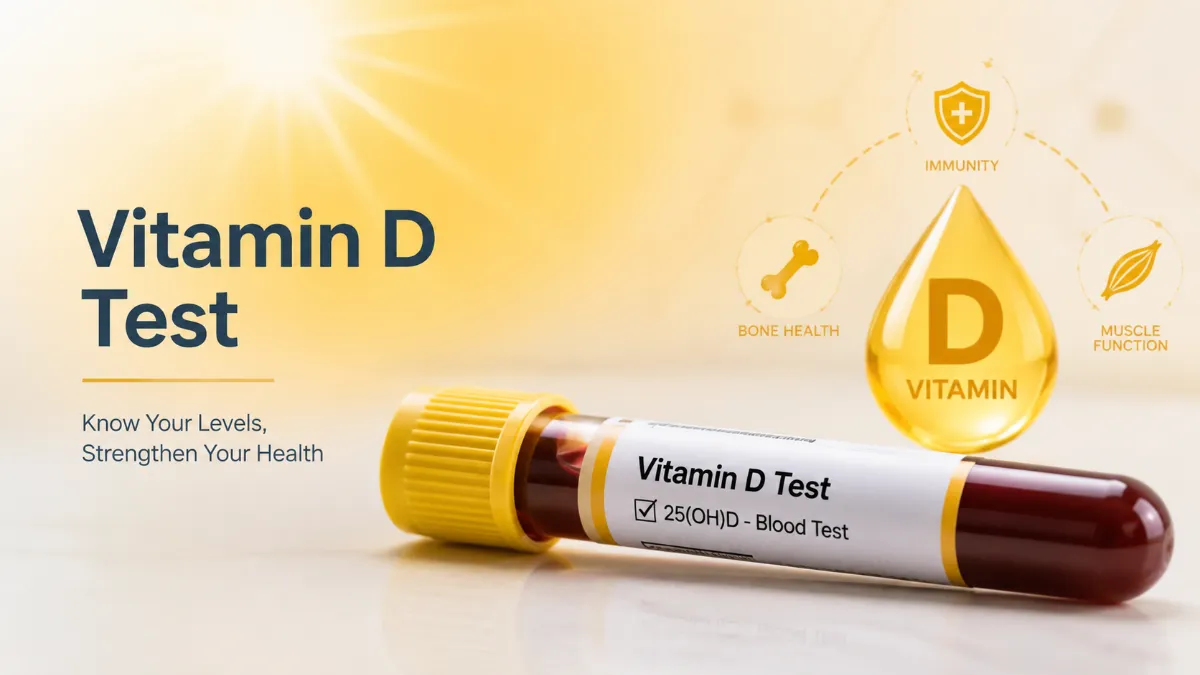
What is a Vitamin D Test?
A Vitamin D test measures the level of 25-hydroxyvitamin D, or 25(OH)D, in your blood. This is the storage form of vitamin D and the form doctors use to judge whether your body has enough of it, since it reflects vitamin D from both sun exposure and diet over the past several weeks.
Vitamin D helps your body absorb calcium and phosphorus, which keeps bones strong, and it also plays a role in muscle function and immune health. Deficiency is common across India despite abundant sunshine, largely due to limited sun exposure on bare skin, indoor lifestyles, and diets that are naturally low in vitamin D.
Why is this test done?
• To check for vitamin D deficiency or insufficiency, especially in people with bone pain, muscle weakness, or fatigue
• To monitor levels in people with osteoporosis or a history of fractures
• To guide and track the response to vitamin D supplementation
• To assess vitamin D status in people with conditions that affect absorption, such as celiac disease or Crohn's disease
Who should get this test?
Routine vitamin D screening isn't recommended for everyone. Talk to your doctor about this test if you have persistent bone or muscle pain, unexplained fatigue, or a condition that affects nutrient absorption. It is also worth discussing if you get very little sun exposure, are above 65 years of age, are obese, or have osteoporosis.
People on medications that affect vitamin D metabolism, such as certain anti-seizure drugs, and those who have had weight-loss surgery may also be advised to test. As always, this list is a starting point for a conversation with your doctor, not a self-diagnosis checklist.
How is the test done?
The test uses a simple blood draw from a vein in your arm. Fasting is not required, and the sample takes only a few minutes to collect. Most labs turn results around within a day or two.
Normal Range
Parameter | Normal Range | Unit |
|---|---|---|
25-Hydroxy Vitamin D — Deficient | Below 20 | ng/mL |
25-Hydroxy Vitamin D — Insufficient | 20 – 29 | ng/mL |
25-Hydroxy Vitamin D — Sufficient | 30 – 100 | ng/mL |
Reference ranges can vary slightly between labs depending on their equipment and method, always check the range printed on your own report.
Some medical societies consider the sufficient range to run from 30 up to 50 ng/mL rather than 100, and cutoffs are still debated among experts. WHO guidelines classify levels below 20 ng/mL (50 nmol/L) as deficient, a threshold widely used as the baseline for bone health.
What does a High result mean?
A high vitamin D level is almost always linked to over-supplementation rather than diet or sun exposure, since it is very difficult to get too much vitamin D from food or sunlight alone. Very high levels are associated with excess calcium in the blood, which can affect the kidneys and heart rhythm over time. If your result comes back high, your doctor will likely review your supplement dose and check your calcium levels before making any changes. Never stop or adjust a vitamin D supplement on your own without medical guidance.
What does a Low result mean?
A low result is associated with vitamin D deficiency, which is linked to weaker bones, increased fracture risk, and in some cases muscle weakness or fatigue. It commonly results from limited sun exposure, a diet low in vitamin D-rich foods, darker skin (which produces vitamin D less efficiently from sunlight), or conditions that reduce nutrient absorption. Deficiency is widespread in India, and a single low reading is common and usually managed with dietary changes, sun exposure, or supplementation under a doctor's guidance.
Factors that can affect results
• Season and time of year, since sun exposure varies through the year
• Skin tone, sunscreen use, and how much skin is typically exposed to sunlight
• Body weight, as vitamin D is stored in fat tissue and levels can appear lower in people with more body fat
• Certain medications, including some used for seizures and cholesterol
• Recent vitamin D supplementation, which can shift results depending on timing
How to Keep It in the Normal Range
Regular, moderate sun exposure on bare skin, ideally around midday, helps your body produce vitamin D naturally. Including vitamin D-rich foods such as fatty fish, egg yolks, and fortified foods in your diet supports this further, especially if sun exposure is limited.
If your doctor recommends a supplement, take it as advised and go for periodic follow-up testing rather than adjusting the dose on your own. Maintaining a generally balanced diet and an active lifestyle supports overall bone and muscle health alongside your vitamin D status.
Questions You May Be Wondering
Do I need to fast before a Vitamin D test?
No. This test does not require fasting, and you can eat and drink normally beforehand.
Why is vitamin D deficiency so common in India despite the sunshine?
Most people get limited direct sun exposure on bare skin due to indoor work, clothing that covers most of the body, and sunscreen use, all of which reduce the skin's vitamin D production even in a sunny climate.
How long does it take for vitamin D levels to improve?
It generally takes a few months of consistent sun exposure, diet, or supplementation for levels to rise meaningfully, and your doctor may recommend a follow-up test to check progress.
Can I take vitamin D supplements without getting tested first?
It's best to test first so your doctor can recommend an appropriate approach for your specific level, since both very low and very high vitamin D levels can affect your health.

Written By
Vishal Dhenwal
BSc Medical Lab Technologist with 6+ years of clinical diagnostic experience. Founder of Sehatam, translating lab-level clinical knowledge into free wellness guidance for Indians.
Read more about the author →Medical Disclaimer
This article is for informational purposes only and is not medical advice. Test ranges can vary by lab — always interpret your results with a qualified doctor. Read our full disclaimer here.
Related Tests