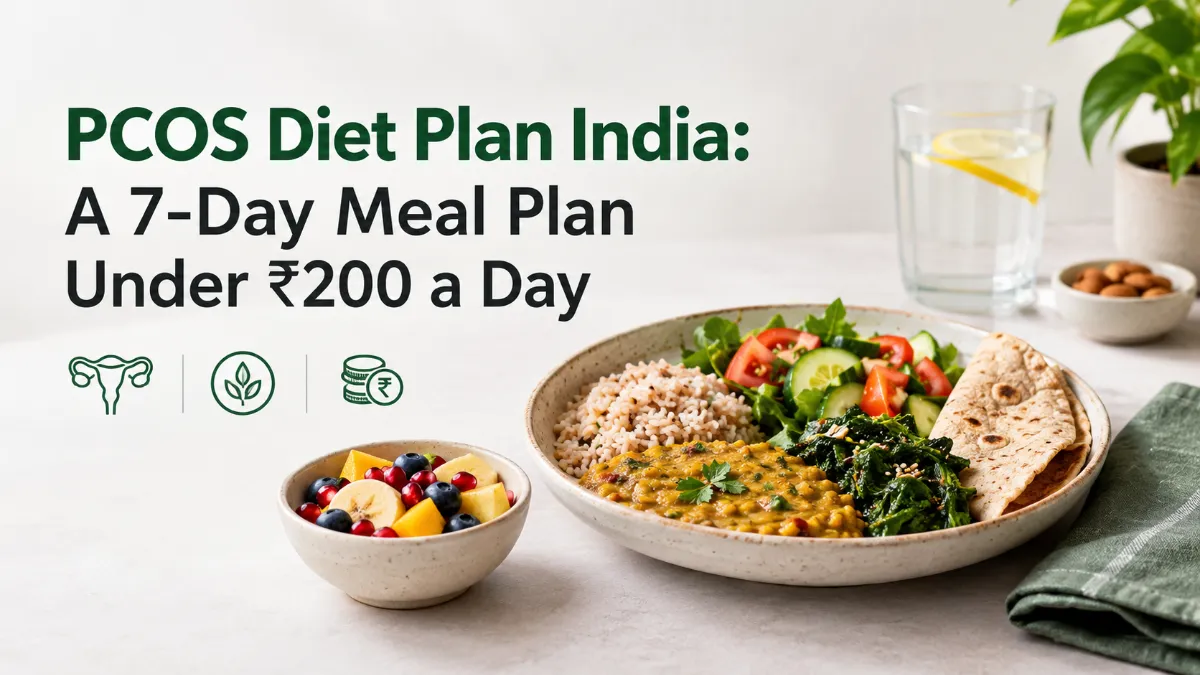
Meta description (suggested): A PCOS diet plan India can afford: a 7-day vegetarian meal plan priced with government data, plus what ICMR, WHO and the 2023 guideline say.
Search for a PCOS diet plan India can afford and the results look like they were written for a metro supermarket.
Two of the top-ranking plans I read for this search lean on quinoa, Greek yoghurt and chia seeds, and neither prices a week of food. This one does. Every staple below is priced against the Government of India’s retail price data from 17 October 2026, and the research behind each food choice is linked where it appears.
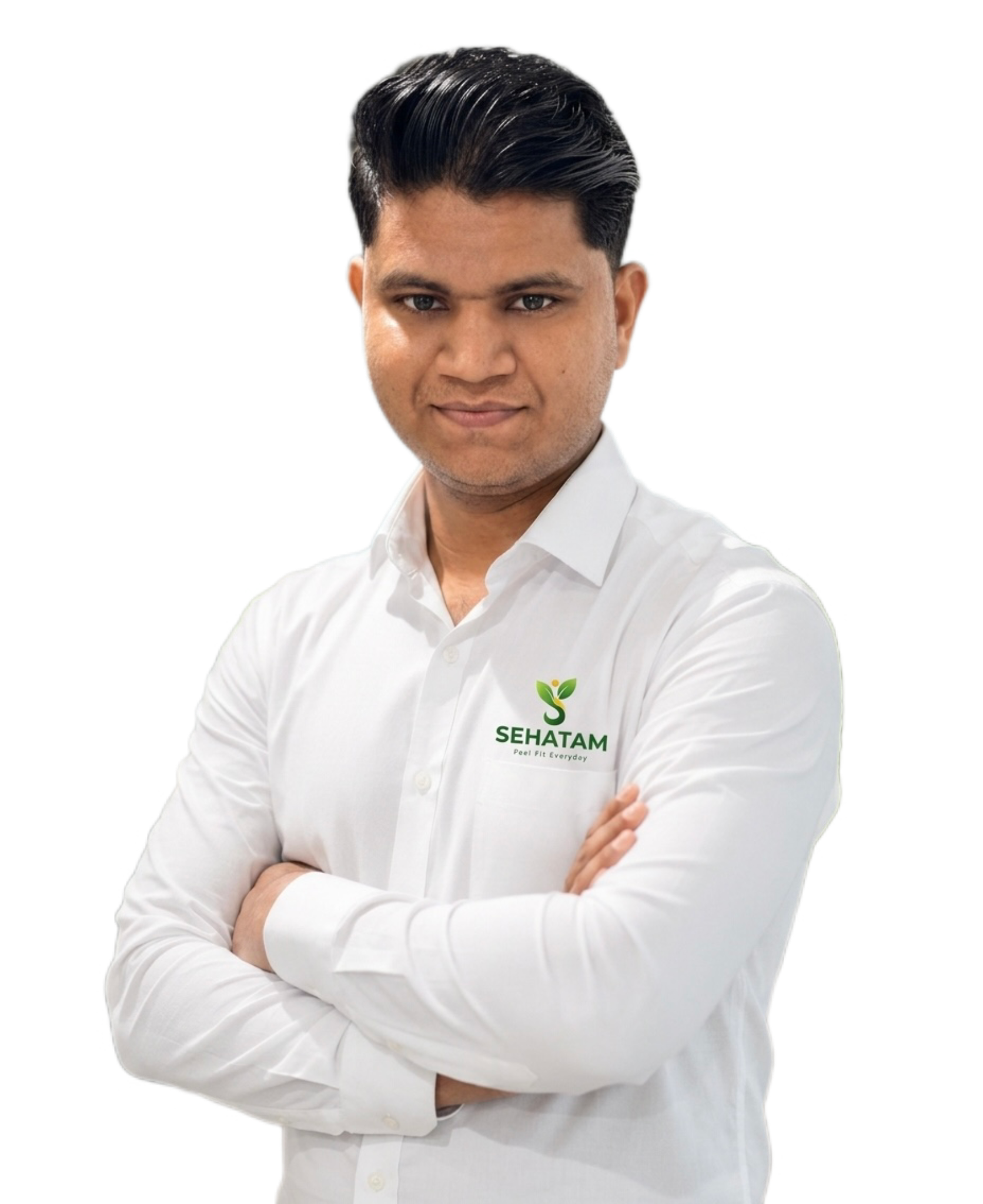
I’m Vishal Dhenwal, a BSc Medical Lab Technologist with six-plus years in clinical diagnostics. I’m not a doctor or a dietitian. This article explains what the research found and shows what a budget week of food can look like. It does not tell you what to do about your own PCOS, because that depends on your reports, and a doctor or registered dietitian who has seen them can answer it.
Quick answer: A PCOS-friendly week of Indian food can come in under ₹200 a day. On government prices from 17 October 2026, the staples in the plan below (flours, rice, dals, oil, milk, onion and tomato) cost about ₹70 a day, which leaves about ₹130 a day for vegetables, fruit and anything else. The 2023 international PCOS guideline does not name one best diet, so the plan follows the pattern with the most trial support: higher fibre and lower glycaemic index.
PCOS in India: What the Largest National Study Found
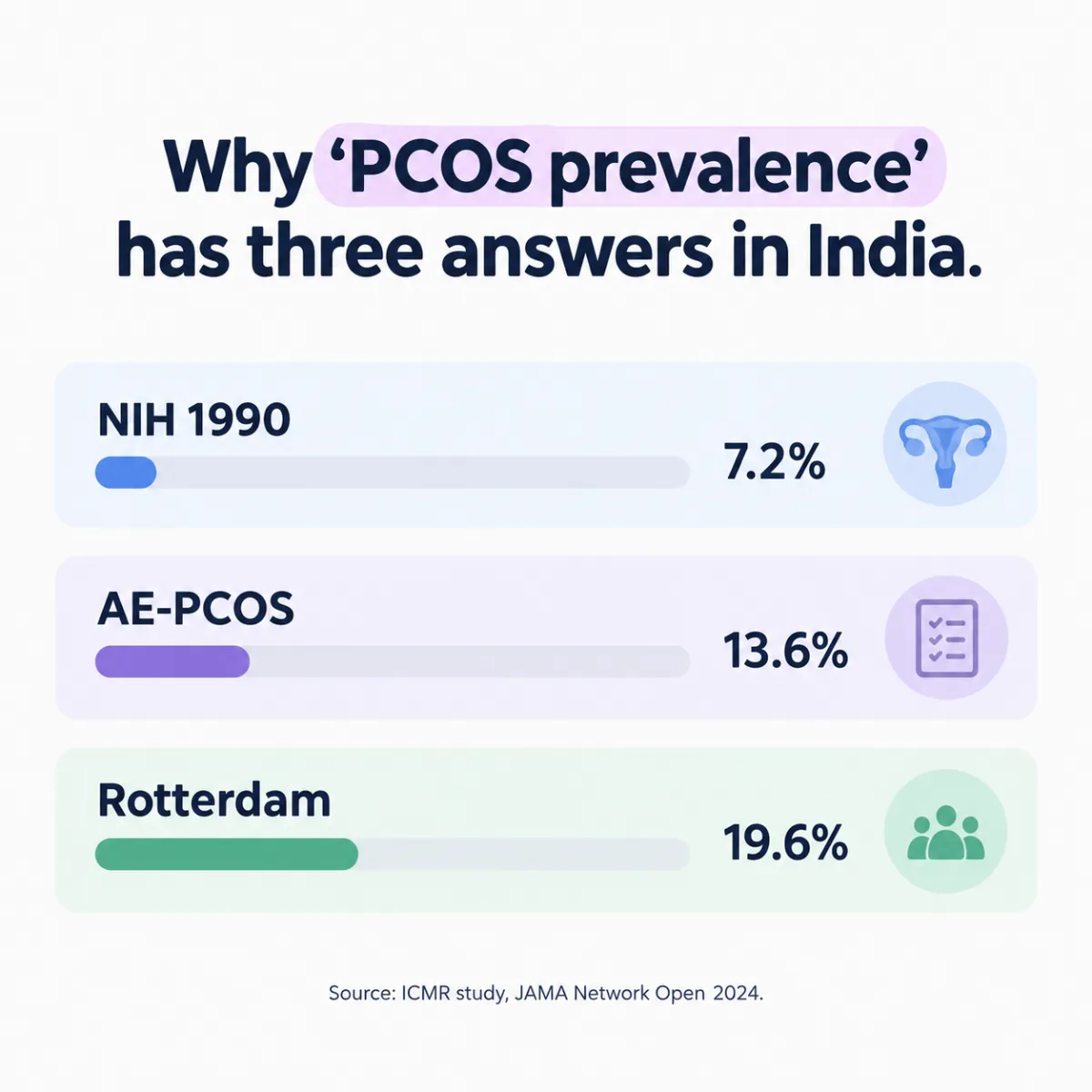
India had thin PCOS data for years because most studies were small or used different diagnostic rules. The ICMR-backed study published in JAMA Network Open in 2024 changed that. It recruited 9,824 women aged 18 to 40 across five zones of the country and applied three sets of diagnostic criteria to the same population.
Diagnostic criteria used | Estimated national prevalence |
|---|---|
NIH 1990 (the strictest) | 7.2% |
AE-PCOS 2009 | 13.6% |
Rotterdam 2003 (the broadest) | 19.6% |
That spread explains why some pages say “1 in 5 Indian women” and others quote a lower figure. The 1-in-5 number comes from the broadest criteria. WHO’s 2026 fact sheet puts the global estimate at 10 to 13% of reproductive-aged women and says up to 70% of them do not know they have it.
The metabolic findings matter more for food than the headline prevalence does. Among the 1,224 women in the study who met PCOS criteria:
• Obesity was present in 43.2%
• Fatty liver disease in 32.9%
• Metabolic syndrome in 24.9%
• Impaired glucose tolerance in 9.1%
• Abnormal blood fats (dyslipidaemia) in 91.9%
These are cross-sectional figures. They show conditions that occur together, not which one causes which. They do explain why the diet conversation around PCOS in India keeps returning to blood sugar and blood fats.
Is There One Best PCOS Diet? What the 2023 Guideline Says
No. The 2023 international evidence-based guideline is endorsed by 39 organisations, and a Nordic summary in Acta Obstetricia et Gynecologica Scandinavica states that a healthy lifestyle should be the focus of care for all women with PCOS, with no specific diet or exercise programme recommended. A 2023 review in BMC Endocrine Disorders reached the same place: changing the amount or quality of protein, carbohydrate or fat generally had similar effects on how PCOS presents.
That finding carries a budget implication. Because the guideline requires no specific food or product, nothing in it points toward premium or imported items, and a plan built from ordinary dal, flour and vegetables is working within the same evidence.
WHO adds a point that gets lost in “lose weight first” advice. Healthy eating and physical activity matter for every woman with PCOS, even when they do not lead to weight loss.
Where Low Glycaemic Index Fits
Glycaemic index (GI) ranks carbohydrate foods by how quickly they raise blood glucose. A 2021 systematic review and meta-analysis of randomised trials found that low-GI diets improved insulin markers, blood fats, abdominal fat and androgen status in women with PCOS. The authors were open about the limits: few trials exist, results for low glycaemic load were contradictory, and many participants drop out of diet trials.
A 2025 meta-analysis in Frontiers in Nutrition of randomised trials found that both high-fibre and low-GI diets lowered triglycerides and LDL cholesterol in women with PCOS.
Claim | What the evidence shows |
|---|---|
Lifestyle change is first-line care | Guideline-level recommendation |
One named diet beats all others | Not supported; no specific diet recommended |
Low-GI, higher-fibre eating improves insulin and blood-fat markers | Supported by meta-analyses, limited by few trials |
Healthy eating only helps if weight drops | WHO says it matters even without weight loss |
Why Everyday Indian Staples Fit That Pattern
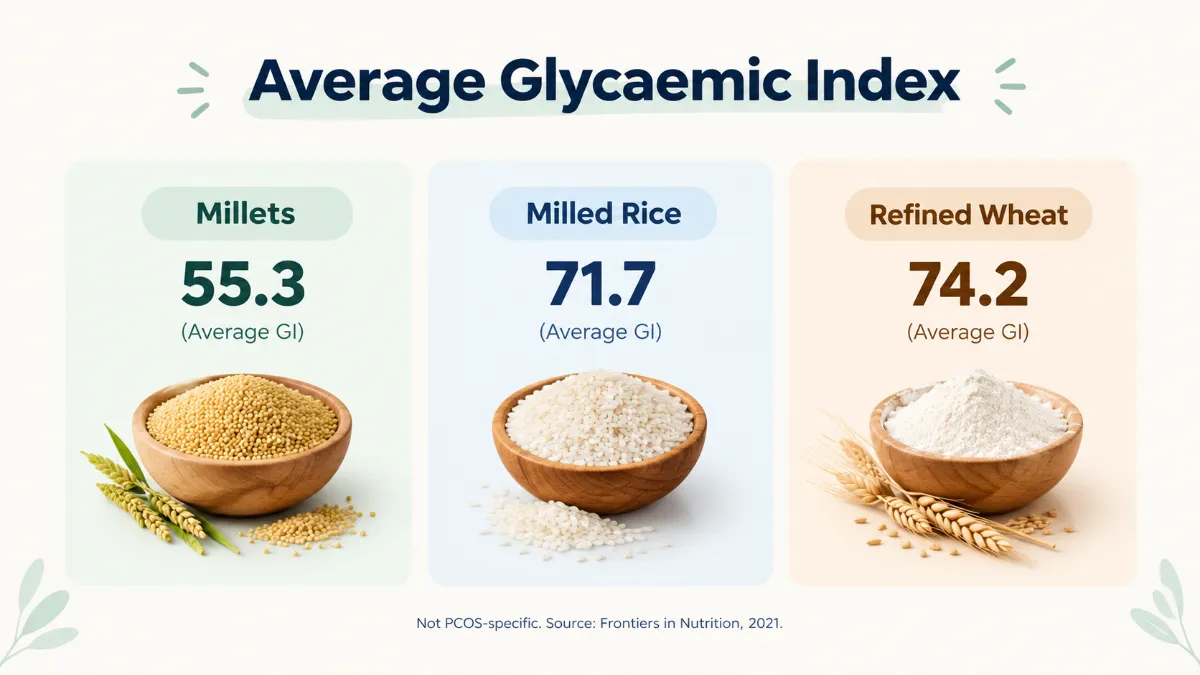
Millets are the clearest example. A 2021 systematic review in Frontiers in Nutrition pooled 39 studies on glycaemic index and reported a mean GI of 55.3 for millets, against 71.7 for milled rice and 74.2 for refined wheat. Every millet except little millet had a significantly lower GI than white rice or refined wheat.
Two caveats apply. The review covered diabetes risk in general populations, not PCOS. And one co-author leads ICRISAT’s Smart Food initiative, which promotes millets, so the enthusiastic press coverage is worth reading with that in mind.
Pulses supply fibre and protein. The ICMR-NIN Dietary Guidelines for Indians advise combining cereals, pulses and millets, eating more fibre-rich foods, and restricting ultra-processed products. The same document advises against protein supplements for building muscle, which is one expense a budget plan can skip.
What ₹200 a Day Buys: Prices From 17 October 2026
The Department of Consumer Affairs publishes all-India average retail prices every day. The table uses the 17 October 2026 figures for the staples in the meal plan, then prices a one-person weekly basket. Quantities are for costing only and are not a portion recommendation. To reprice the basket on any later day, multiply that day’s published price by the quantity column.
Item | Price (₹/kg or ₹/litre) | Quantity used for costing | Weekly cost (₹) |
|---|---|---|---|
Atta (wheat) | 37.58 | 0.5 kg | 18.79 |
Bajra | 39.37 | 0.5 kg | 19.68 |
Jowar | 45.77 | 0.5 kg | 22.89 |
Ragi | 55.58 | 0.3 kg | 16.67 |
Rice | 47.74 | 0.35 kg | 16.71 |
Besan | 98.38 | 0.25 kg | 24.59 |
Moong dal | 113.93 | 0.35 kg | 39.88 |
Masoor dal | 90.38 | 0.35 kg | 31.63 |
Chana (gram) dal | 92.34 | 0.3 kg | 27.70 |
Tur dal | 131.59 | 0.2 kg | 26.32 |
Groundnut oil | 208.96 | 0.2 kg | 41.79 |
Milk | 61.41 | 2 litres | 122.82 |
Onion | 52.28 | 0.7 kg | 36.60 |
Tomato | 39.63 | 0.7 kg | 27.74 |
Potato | 23.04 | 0.3 kg | 6.91 |
Ginger | 34.67 | 0.1 kg | 3.47 |
Garlic | 45.35 | 0.1 kg | 4.54 |
Total for the week | 488.73 |
The basket works out to ₹69.82 a day, leaving ₹130.18 of a ₹200 budget. Leafy greens, seasonal vegetables, peanuts, whole chana, fruit, spices and eggs are not in the table because the price monitor does not track them, so how far that remainder stretches depends on your city and the season.
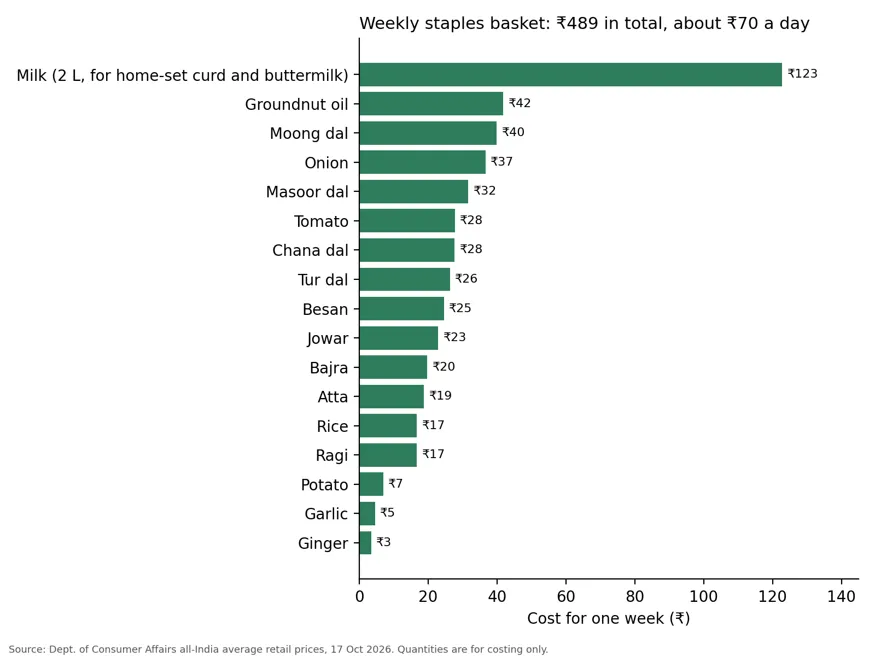
Horizontal bar chart of the weekly staples basket cost by item, totalling ₹489
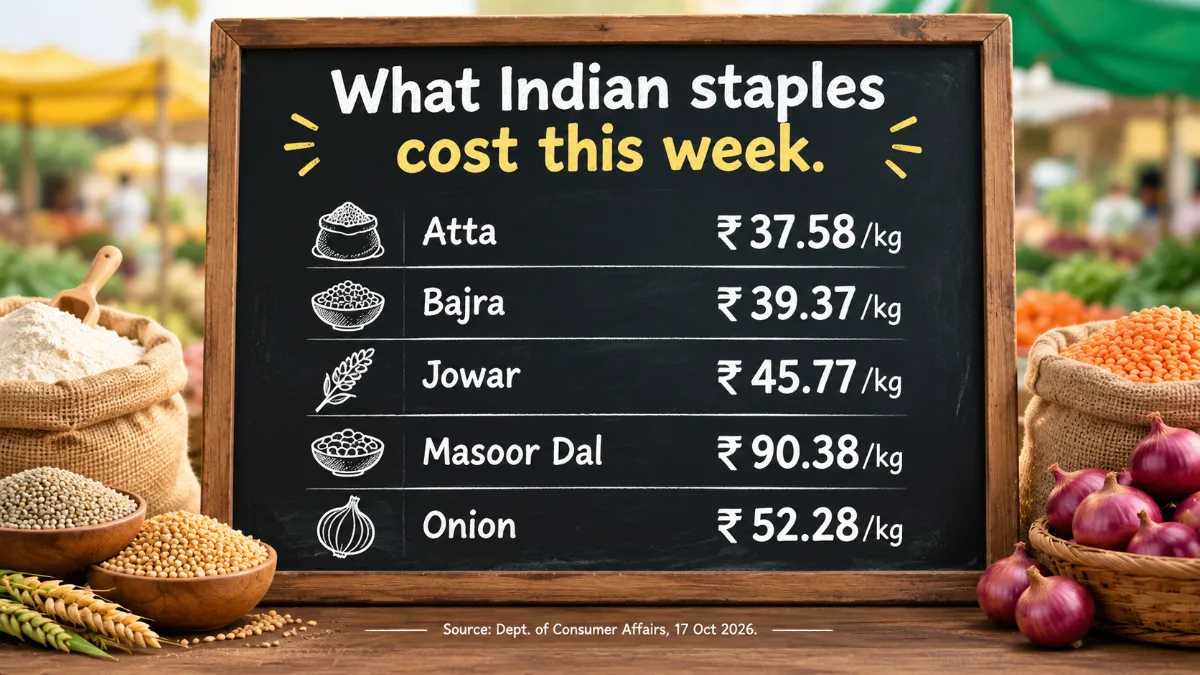
Where the Money Goes
Milk is the largest single line at ₹122.82, about a quarter of the basket. A reader who does not use dairy cuts the weekly total to ₹365.91 before replacing it with anything else. The four dals together cost ₹125.53, and the three millet flours cost ₹59.24 combined, less than half the milk bill.
Millets are not the expensive part of this plan. Bajra at ₹39.37 a kg is cheaper than rice at ₹47.74, and jowar sits just below it. Ragi is the dearest millet on the list at ₹55.58.
Dal choice matters even less than it looks. Masoor at ₹90.38 sits ₹41.21 a kg below tur at ₹131.59. Swapping every masoor and chana dal meal in the basket for tur would add ₹26.20 a week, about ₹3.74 a day.
If Prices or Habits Differ
The ₹200 figure is a ceiling with room to spare, not a fixed price. Three scenarios, all calculated from the same table, show how far the staples basket moves:
Scenario | Weekly cost (₹) | Per day (₹) |
|---|---|---|
Basket as priced above | 488.73 | 69.82 |
No milk in the basket | 365.91 | 52.27 |
Every dal bought as tur, the dearest of the four | 521.11 | 74.44 |
Even the dearest dal choice moves the daily figure by under ₹5. The larger swing comes from how much dairy the household buys and from the seasonal vegetables outside the table, which is why the remaining ₹130 is left unallocated rather than assigned to specific items I cannot price.
The plan leaves out quinoa, chia seeds, berries and Greek yoghurt. They appear in the top-ranking plans I read, but the government price list does not track them, so their cost cannot be checked here, and none of the research above requires them.
PCOS 7 Day Meal Plan: A Vegetarian Week on a Budget
This is a sample of what a week built from the basket can look like. It is not a prescription. It gives no calorie or portion targets because portion needs depend on age, activity, medical history and reports, and a registered dietitian is the right person to set them. Every dish uses the priced staples plus ordinary seasonal vegetables.
Day | Breakfast | Lunch | Evening snack | Dinner |
|---|---|---|---|---|
Monday | Besan chilla with onion and tomato, mint chutney | Jowar roti, masoor dal, lauki sabzi, cucumber salad | Roasted chana | Moong dal khichdi with vegetables, curd |
Tuesday | Ragi cheela with tomato chutney | Bajra roti, chana dal, palak sabzi, curd | Buttermilk and peanuts | Atta roti, masoor dal, cabbage sabzi |
Wednesday | Moong dal chilla with green chutney | Rice, tur dal, tori sabzi, salad | Banana | Jowar roti, methi and chana dal |
Thursday | Ragi ambali (salted ragi porridge) with buttermilk | Bajra roti, moong dal, bhindi sabzi | Roasted chana | Bajra and moong dal khichdi with vegetables |
Friday | Vegetable besan cheela | Jowar roti, tur dal, baingan bharta, salad | Buttermilk | Mixed atta and bajra roti, palak dal |
Saturday | Ragi dosa with tomato-onion chutney | Rice, chana dal, lauki raita, salad | Seasonal fruit | Masoor dal khichdi, curd |
Sunday | Moong dal chilla with curd | Jowar roti, besan kadhi, seasonal sabzi | Banana | Mixed millet roti, tur dal, seasonal sabzi |
A few swaps keep the week flexible without changing the cost much:
• Any dal can fill any dal slot, so the cheapest one that week wins.
• Methi, sarson or any other leafy green can take the place of palak.
• Jowar, bajra and ragi rotis can trade places freely.
• For those who eat eggs, an egg preparation can replace a chilla or a dal meal on any day.
Sunday Prep Notes
The week gets easier if some work happens once. Chilla and cheela batters hold in the fridge for a day or two, so besan, moong dal and ragi batters can be mixed in one sitting. A large pot of dal covers a khichdi night and a thinner dal at the next lunch. Milk set into curd at home turns the basket’s biggest line into both curd and buttermilk, the two dairy items the menu relies on.
If You Eat Eggs, Fish or Chicken
The menu works without them and also leaves room for them. Eggs, fish and chicken can sit alongside the same dal, vegetable and roti structure on any day. The price monitor lists eggs, but the listing I saw does not state whether the figure is per dozen or per kg, so I have not priced them here. Check your local rate before adding them to the basket.
Three Recipes Behind the Menu
Several meals in the week repeat three preparations, so it is worth knowing them well.
Besan chilla. Whisk besan with water into a pourable batter, then stir in chopped onion, tomato, green chilli and a pinch of ajwain. Pour onto a hot, lightly oiled tawa, spread thin, and cook until the edges lift on both sides. A thinner batter gives a crisper chilla, and a thicker one gives a softer, pancake-like result.
Bajra and moong dal khichdi. Soak whole bajra for four to six hours, then pressure-cook it with moong dal, turmeric, ginger and chopped vegetables until everything is soft. Finish with a short tempering of cumin in a little oil. The soaking is what keeps the cooking time close to that of ordinary rice khichdi.
Ragi ambali. Mix ragi flour into cool water until smooth, then cook on low heat, stirring, until it thickens and turns glossy. Season with salt and cumin. Stir in buttermilk only after the porridge has cooled, so the curd does not split.
What the Lab Work Around PCOS Involves
Because I work with lab reports, this is the part of the PCOS conversation I can explain with some confidence, and also the part no article should try to do for you.
WHO says a diagnosis rests on at least two of three findings once other causes are excluded: signs of high androgens or a raised testosterone level, irregular or absent periods, and polycystic ovaries on ultrasound. Ovarian cysts are not required. Blood tests detect raised androgens in women without visible symptoms and check whether ovulation is happening in women who have regular cycles. Under the 2023 guideline, polycystic ovary morphology can be assessed by ultrasound or by an elevated anti-Müllerian hormone level.
After a diagnosis, WHO recommends extra blood testing for underlying insulin resistance and overall cardiovascular risk. Those results are what turn a general food pattern into a personal one. The numbers, and what to do about them, belong to the doctor who orders the tests. This article gives no cut-offs for that reason.
Who Should Get Individual Advice First
A sample menu cannot account for medicines, other conditions or personal history. WHO lists combined oral contraceptive pills and androgen receptor blockers among treatments for PCOS. If your doctor has prescribed any medication, this plan does not change it, and starting, stopping or adjusting a medicine is a decision for your doctor alone.
People with diabetes or kidney disease should check with their doctor before following any structured eating plan. The same goes for anyone with a history of disordered eating. Ask your treating doctor whether a referral to a registered dietitian makes sense, since a dietitian can turn a sample menu into portions that fit your reports, activity and food preferences. WHO notes that women with PCOS may experience eating disorders and negative body image, so a fixed weekly menu is worth discussing with a clinician first.
Frequently Asked Questions
Can I eat rice if I have PCOS?
Yes. The 2023 guideline does not ban any staple and recommends no specific diet. Rice does score higher on glycaemic index than millets, which is why the plan above uses it in a few meals and relies on millet rotis for most of the rest.
Which dal is best for PCOS?
No trial ranks one dal above another. ICMR-NIN guidelines recommend pulses as a group for protein and fibre, so the choice can follow price and taste. On the government’s 17 October 2026 price list, masoor was the cheapest of the five dals tracked.
Can diet reverse PCOS?
WHO states there is currently no cure for PCOS and that lifestyle changes and medicines can reduce symptoms and protect long-term health. Diet is one part of that care, and your doctor decides the rest.
Can a PCOS diet plan in India cost under ₹200 a day?
On government prices from 17 October 2026, the staples in this plan cost about ₹70 a day, which leaves about ₹130 for vegetables, fruit and other items the price monitor does not track. Prices differ by city and season, so check your local market before assuming the same total.
Written By
Vishal Dhenwal
BSc Medical Lab Technologist with 6+ years of clinical diagnostic experience. Founder of Sehatam, translating lab-level clinical knowledge into free wellness guidance for Indians.
Read more about the author →Medical Disclaimer
This article is for informational purposes only and is not medical advice. Nothing here should be used to start, stop, or change any medication or treatment — always consult a qualified doctor first. Read our full disclaimer here.
Related Articles