What is Hemoglobin (Hb) Test?
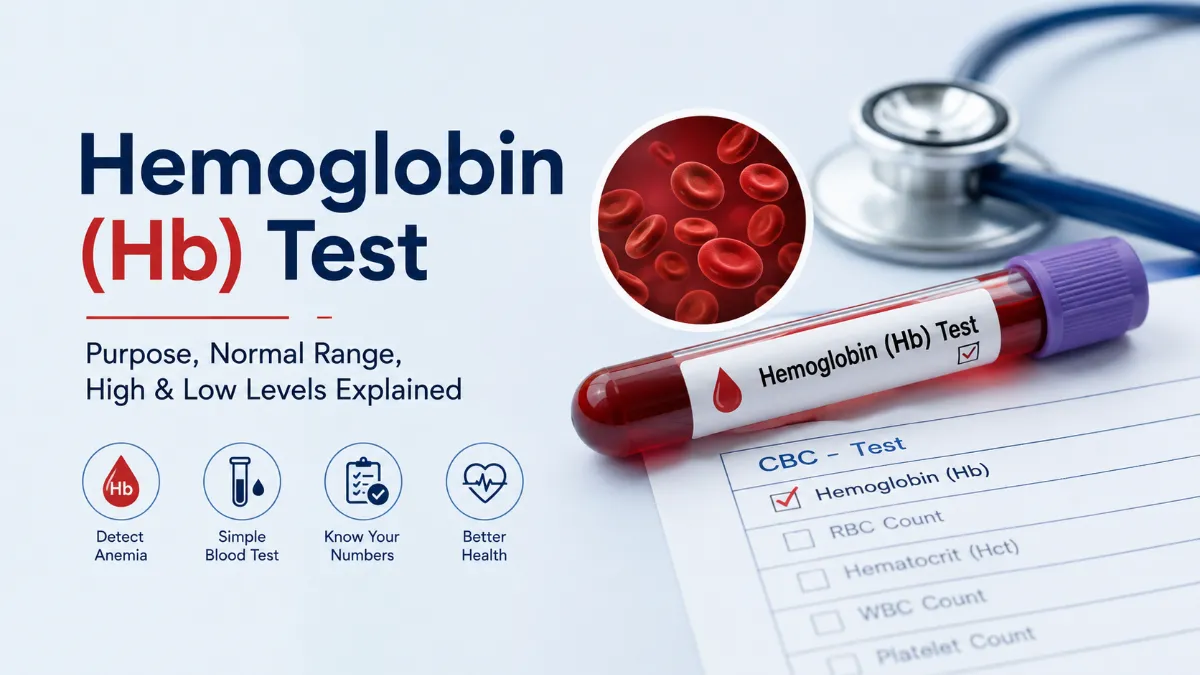
Hemoglobin, often shortened to Hb or Hgb, is the iron-containing protein inside your red blood cells that carries oxygen from your lungs to every tissue in your body, and carries carbon dioxide back for you to exhale. A Hemoglobin test measures how much of this protein is present in a sample of your blood, usually reported in grams per deciliter (g/dL).
It is commonly included as part of a Complete Blood Count (CBC), almost always included as part of a Complete Blood Count (CBC), because it gives a quick read on your blood's ability to carry oxygen.
Why is this test done?
• As part of a routine health checkup or Complete Blood Count
• To investigate symptoms like fatigue, weakness, pale skin, or breathlessness
• To screen for anemia during pregnancy
• Before and after surgery, to check whether a blood transfusion may be needed
• To monitor chronic conditions such as kidney disease, or ongoing treatment for anemia or certain cancers
Who should get this test?
Talk to your doctor about a Hemoglobin test if you often feel tired or breathless during routine activity, notice your skin or nails looking unusually pale, or have heavy menstrual periods.
Pregnant women are routinely tested at multiple points during pregnancy, since anemia is common in India and can affect both mother and baby. People managing chronic kidney disease, inflammatory conditions, or ongoing cancer treatment are also tested regularly, since these can affect hemoglobin over time.
How is the test done?
A Hemoglobin test uses a small blood sample, drawn from a vein in your arm or, less often, from a finger prick. No fasting is required, so you can eat and drink normally beforehand. The draw itself takes only a couple of minutes, and results are typically available within a day.
Normal Range
Parameter | Normal Range | Unit |
|---|---|---|
Adult Men | 13.2 – 17.2 | g/dL |
Adult Women (non-pregnant) | 11.6 – 15.1 | g/dL |
Pregnant Women | Generally at or above 11.0 (varies by trimester) | g/dL |
Newborns | 14 – 24 | g/dL |
Infants | 9.5 – 13 | g/dL |
Reference ranges can vary slightly between labs depending on their equipment and method — always check the range printed on your own report.
The World Health Organization's 2024 guidelines, used as a public health benchmark for detecting anemia, define hemoglobin below 13 g/dL in men aged 15 to 65 as low, and below 12 g/dL in non-pregnant women in the same age range. These are population-level screening cutoffs, and they differ slightly from the broader reference range your lab report shows, which reflects the spread seen across a healthy population.
What does a High result mean?
A Hemoglobin result above your lab's reference range does not automatically mean something is wrong. It is commonly associated with dehydration, since less fluid in your blood makes hemoglobin appear more concentrated.
It is also associated with long-term smoking and with living at high altitude, both of which can prompt the body to make more red blood cells to compensate for lower oxygen availability. Less often, elevated levels are associated with chronic lung or heart conditions, or with a rare bone marrow disorder called polycythemia vera. If your result is high, your doctor may repeat the test after you are well hydrated, or order further tests, to understand the reason.
What does a Low result mean?
A Hemoglobin result below the normal range is generally associated with anemia, though the specific cause needs further evaluation. Common associations include iron, vitamin B12, or folate deficiency, blood loss from heavy periods or the digestive tract, and chronic conditions such as kidney disease.
In India, anemia remains widespread, particularly among women and children, and iron deficiency is the most frequent underlying cause. For pregnant women specifically, the Indian Council of Medical Research grades anemia by severity, from mild to very severe, to help guide how urgently further care may be needed. A low result on its own is a starting point for your doctor, not a diagnosis, since other tests are usually needed to pin down the specific cause.
Factors that can affect results
• Dehydration can temporarily push results higher, and getting more fluids can bring them back down
• Smoking is linked to modestly higher hemoglobin, independent of any underlying disease
• Living at high altitude naturally raises hemoglobin, as the body adapts to lower oxygen in the air
• Pregnancy naturally lowers hemoglobin somewhat, due to the rise in blood plasma volume
• The time of day and recent strenuous exercise can cause small, temporary shifts
How to Keep It in the Normal Range
Hemoglobin depends heavily on having enough iron, vitamin B12, and folate available to build healthy red blood cells. A varied diet with iron-rich foods such as leafy greens, legumes, and lean meat, paired with vitamin C-rich foods that support iron absorption, helps maintain healthy levels over time.
Staying well hydrated matters too, since concentrated or diluted blood can shift a reading without reflecting a real change in your red blood cell count. Regular, moderate physical activity supports healthy circulation, while consistent sleep gives your body time to repair and regenerate.
If you smoke, cutting back can help your results reflect your actual health status rather than a smoking-related shift. Routine checkups, especially during pregnancy or alongside a chronic condition, help catch changes early, often before symptoms appear.
Questions You May Be Wondering
Do I need to fast before a hemoglobin test?
No. A standard hemoglobin test does not require fasting, and you can eat and drink normally beforehand. This is different from tests like fasting blood sugar or a lipid profile.
Is Hemoglobin (Hb) the same as HbA1c?
No. A standard Hb test measures the total amount of hemoglobin in your blood and is used mainly to check for anemia. HbA1c, sometimes called glycated hemoglobin, measures the percentage of hemoglobin that has glucose attached to it, and is used to assess average blood sugar control over the past two to three months. They serve different purposes despite the shared name.
Can hemoglobin be low without any symptoms?
Yes. Mild drops in hemoglobin can go unnoticed for a while, especially if the decline is gradual. This is one reason routine testing during pregnancy and general checkups is useful even without obvious symptoms.
What is considered a dangerously low hemoglobin level?
This depends on the person, the underlying cause, and how quickly the level dropped, so it is best assessed by your doctor rather than a fixed cutoff. A sudden, sharp drop is generally treated with more urgency than a gradual decline to a similar level, since the body adapts differently in each case.
Does drinking water affect a hemoglobin test?
It can, in the short term. Being dehydrated concentrates your blood and can push hemoglobin slightly higher, while being well hydrated can bring a borderline-high reading back into range. This is why doctors sometimes repeat a high result after normal hydration before drawing conclusions.

Written By
Vishal Dhenwal
BSc Medical Lab Technologist with 6+ years of clinical diagnostic experience. Founder of Sehatam, translating lab-level clinical knowledge into free wellness guidance for Indians.
Read more about the author →Medical Disclaimer
This article is for informational purposes only and is not medical advice. Test ranges can vary by lab — always interpret your results with a qualified doctor. Read our full disclaimer here.